Review: Retaliation (1968)

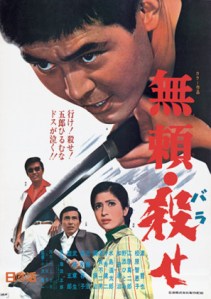
Director Yasuharu Hasebe and Nikkatsu star Joe Shishido return for another yakuza collaboration in Retaliation (1968). Shot in colour, a year after their monochrome work in Massacre Gun, their follow-up has a completely different tone, energy, and style. Shishido, speaking in an interview in his seventies, ruefully commented that all these movies were the same – two gangs fight, and they just had to find a way to make it interesting and different each time. He’s not wrong, but he does himself and his collaborators a disservice: Retaliation is a far superior film to either Massacre Gun or the contemporary Tetsuya Watari vehicle Outlaw VIP, a pitch-perfect take on the late ‘60s yakuza action movie format.

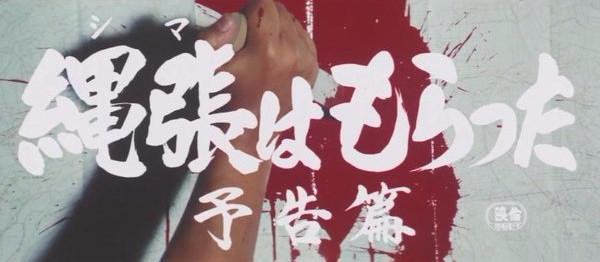
Retaliation Titles

Continue reading “Review: Retaliation (1968)”

Review: Massacre Gun (1967)

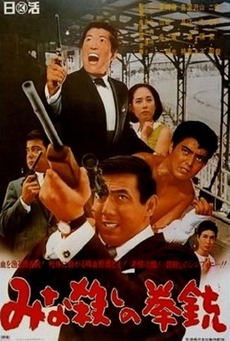
Get ready for a dose of late ‘60s yakuza action with Yasuharu Hasebe’s Massacre Gun (1967). Massacre Gun (1967) PosterLike a few of the other Japanese gangster movies I’ve reviewed here on Kino 893, it’s a title that Arrow have rescued from relative obscurity; it only got its Western debut at the Fantasia film festival in 2012. I’ve already written about Hasebe’s work on Stray Cat Rock: Delinquent Girl Boss, a surprisingly fun action movie with an unexpectedly anti-authoritarian vibe. It was through Massacre Gun that I discovered he had trained under (in)famous director Seijun Suzuki as an assistant director, and unlike Delinquent Girl Boss, that heritage is readily apparent here. From the way the film is staged, shot in monochrome, and features Suzuki collaborators Joe Shishido (Branded to Kill) and Hideaki Nitani (Voice Without a Shadow), Massacre Gun positively screams Seijun Suzuki. With that in mind, how does it hold up?

Continue reading “Review: Massacre Gun (1967)”

Review: Psycho-Pass: The Movie (2015)

It wasn’t really my intention to limit my anime reviews to Production I.G’s films, but I wound up watching Psycho-Pass: The Movie (2015) and here we are. Psycho-Pass PosterThe film follows Psycho-Pass (2012) and Psycho-Pass 2 (2014), both television anime series. Like Production I.G’s own, earlier Ghost in the Shell: Stand Alone Complex and the subsequent Solid State Society film, and not unlike what they’d later repeat with Ghost in the Shell ARISE project, this anime film follows an existing series and doesn’t truly stand alone – something to keep in mind before deciding to watch it. 

Continue reading “Review: Psycho-Pass: The Movie (2015)”

Review: Kagemusha: The Shadow Warrior (1980)

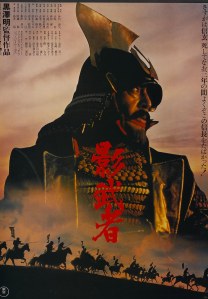
Akira Kurosawa is surely one of the most well-known Japanese filmmakers, and it was exploring some of his classic samurai films that prompted me to create this blog.kagemushaposter I wanted to explore more of his work and that led me to Kagemusha (1980). While I hope to watch some of his films from other genres soon, Kagemusha is nevertheless interesting even though it’s another samurai epic. It marks the first Kurosawa film I’ve seen in colour – only his third overall, following Dodeskaden and the Soviet-Japanese production Dersu Uzala. Even though colour film seemed to arrive late in Japan, Kurosawa continued working in black and white well into the 1960s. Kagemusha is also striking to me for the absence of Toshiro Mifune, Kurosawa’s longtime collaborator. The 1965 film Red Beard was their last work, but instead Kagemusha features Tastuya Nakadai as the lead – unrecognisable from his earlier appearances as villains in Kurosawa’s Yojimbo and Sanjuro.

Continue reading “Review: Kagemusha: The Shadow Warrior (1980)”

Review: Voice Without a Shadow (1958)

Watching foreign language films as an English speaker, you’re necessarily limited by the availability of films that have been translated and released in your local region. voicewithoutashadowposterThat means the quality and availability of Japanese films with English language subtitles (ignoring for a moment the often very fine work of fansubbers)  is not necessarily representative of the quality or breadth of Japanese cinema in general. This is even more true when looking back at older films; while a contemporary film might at least get a limited release in the West, older films by lesser known directors or even by well-respected auteurs can be difficult to find. Even Akira Kurosawa’s outsized shadow over Japanese cinema doesn’t mean it’s possible to find all his films on DVD, let alone restored on Blu-ray. That’s why I’m so thrilled to have outfits like Arrow Video, Masters of Cinema, and the Criterion Collection that put out restored copies of both classic and obscure films. Arrow, in particular, deserves commendation for being much broader in what it will publish; it’s not that every lesser-known work is a forgotten classic, but it would be a real shame to lose these titles forever.
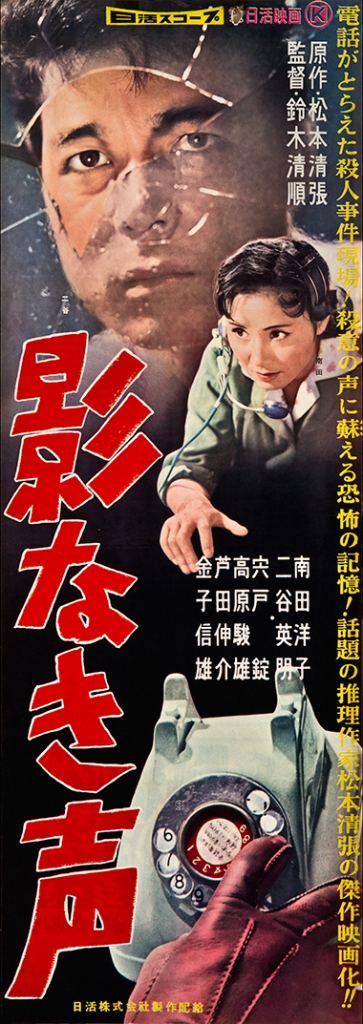
All that is a long preamble to introducing Arrow Video’s “Nikkatsu Diamond Guys” series. With two volumes so far, that’s six lesser known works from some cult directors that might not otherwise see the light of day again. Let’s start with Seijun Suzuki’s Voice Without a Shadow (1958).

Continue reading “Review: Voice Without a Shadow (1958)”

Review: Female Prisoner #701: Scorpion (1972)

As I look to explore the cult and classic movies of Japanese cinema from the ‘50s, ‘60s, and ‘70s, I’m limited by what’s actually available in the West and guided by recommendations from other film fans and critics. Female Prisoner #701: Scorpion (1972) was an early suggestion for this blog and one that I’m glad I sought out. femaleprisonerscorpionThe directorial debut of Shunya Itō, starring Meiko Kaji, Scorpion is a brutal exploitation film and a subversive example of the women in prison subgenre.
Continue reading “Review: Female Prisoner #701: Scorpion (1972)”

Review: Outlaw: Kill! (1969)

Between 1968 and 1969, Nikkatsu put out six films in the Outlaw Gangster series: VIP, VIP OutlawKillPoster2, Heartless, Goro the Assassin, Black Dagger, and in the opening months of 1969, Kill! A great deal of credit must go to Arrow for resurrecting this more-or-less forgotten series after a showing at an Italian film festival in the mid-2000s. I’ve lamented before that there’s very little English language information on the series, from sketchy IMDB entries to a barren Wikipedia page, even when investigated in Japanese. To be launched from almost complete obscurity to a premium Blu-ray collection loaded with extras from Japanese film scholars is impressive.

Continue reading “Review: Outlaw: Kill! (1969)”

Review: Samurai I: Musashi Miyamoto (1954)

I was drawn to Hiroshi Inagaki’s Samurai trilogy, starting with Musashi Miyamoto (1954), MusashiMiyamotoDVDCoverfor the simple fact that it’s shot in colour. Kurosawa’s masterful Seven Samurai came out in the same year but is, of course, in black and white – it wasn’t until 1970 that he would begin shooting in colour with the commercially disastrous Dodes’ka-den. Surprisingly, the first Japanese colour film only came out in 1951, with the first Japanese colour film to be released in the West, Gate of Hell, not made until 1953. I’m fascinated by that early use of colour. Carmen Comes Home used Fujicolor, but Gate of Hell and Musashi Miyamoto were made with Eastmancolor, a US technique. It’s extraordinary seeing the way colour changes the way the films are shot, and so much of what makes Musashi Miyamoto worth watching is the vivid colourscape – lush green scenery, vibrant clothes, colourful blossoms.
Continue reading “Review: Samurai I: Musashi Miyamoto (1954)”

Review: Ghost in the Shell: The New Movie (2015)

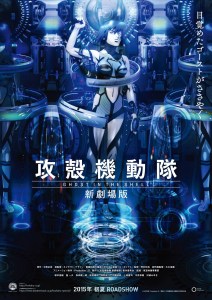
Ghost in the Shell: The New Movie (2015) is the feature-length follow-up to Ghost in the Shell ARISE, the third animated iteration of the Ghost in the Shell franchiseTheatrical roadshow poster (after the original films and the Stand Alone Complex era of the early 2000s). In Japanese, it’s called Shin Gekijōban’, which is akin to ‘the new movie based on an anime or television series’. This explains both the clumsy English language title and the reliance on characters and plot elements from ARISE that, enjoyable or not, prevents it from excelling as a standalone experience.

Continue reading “Review: Ghost in the Shell: The New Movie (2015)”

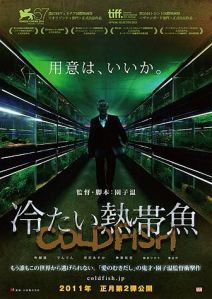
Review: Cold Fish (2010)

When I first started blogging about Japanese movies a couple of months ago, I began backCold_fish in the 1950s with some of Akira Kurosawa’s best known work. Then I jumped ahead to the ‘60s and ‘70s for some cult classics. Now with Sion Sono’s Cold Fish (2010) we move into the modern era. I’m a big fan of other contemporary Japanese directors but Sono had completely passed me by, and this film was recommended to me as an accessible jumping on point for the work of someone called “the most subversive filmmaker working in Japanese cinema today.”

Continue reading “Review: Cold Fish (2010)”