明けましておめでとう!
Welcome to 2018 and welcome back to Kino 893. Last year, I set out to explore Japanese cinema in a way I never had before, pushing myself to hunt down everything from classics by Akira Kurosawa to B-movie action and horror unearthed by niche publishers like Arrow, Eureka, and Criterion. I’d always had a soft spot for Japanese films given my time spent living in or studying Japan over the last decade, but 2017 marked the first time I sat down to check out a lot of films I really should have seen before.
I started Kino 893 to chronicle the different movies I was watching and hopefully over time build up an eclectic collection of reviews. For many of the more obscure films, I was also encouraged by the fact very little information on them exists in English, and I wanted to try and include as much as I could for other film fans looking to track this stuff down. I was aiming to release a new review every week for the whole of 2017, but ‘real life’ occasionally got in the way – but still, 45 out of 52 isn’t bad! In 2018, I hope to hit my target, as well as releasing the occasional ‘bonus’ review still relevant to the site – Hollywood movies set in Japan, the Western films of Japanese directors, or Japanese dorama, anime, or videogames.
With the holiday season now behind us, if you missed my reviews of Merry Christmas, Mr. Lawrence or Tokyo Godfathers, be sure to check them out now. New reviews will start arriving this Friday, January 4th, with Akira Kurosawa’s Rashomon leading the pack. As ever, follow and subscribe to get updates on new reviews and articles, and I welcome comments on reviews whether you agree or disagree with my takes.
 Bunta Sugawara stars as Kuroda, a wanderer who takes the fall for a murder on the understanding that when he gets out of jail, the Owada crime family will take him on-board and pay handsomely for his service. When his heroin junkie contact (Tsutomu Yamazaki, A Taxing Woman) in the family lets him down, Kuroda stops at nothing to get what he feels he deserves.


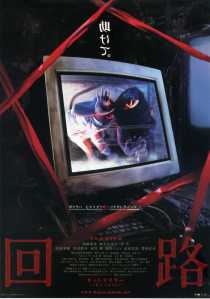 It would be easy to dismiss
  The acquisition of
 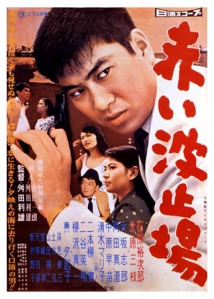 It stars Yujiro Ishihara as “Lefty” Jiro, a ‘50s gangster laying low in Kobe after killing a civilian over a drug smuggling racket. When he falls for the victim’s sister and starts to let slip his involvement, his low-key criminal underworld starts to come unravelled.
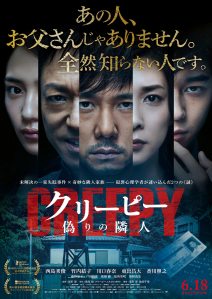 leaves his job hunting serial killers to become an academic specialising in criminal psychology, but when his new job is unfulfilling he re-opens the cold case of a missing family on the side. In a parallel story, his wife becomes perturbed by their unusual new neighbour Nishimoto (Teruyuki Kagawa). But as Takakura tells his wife – serial killers are usually nice to their neighbours, so she has nothing to fear from the socially graceless Nishimoto. Right?
 so here’s


 homeless protagonists happen upon an abandoned baby on Christmas Eve in Tokyo. Gin, a middle-aged alcoholic, Hana, a former drag queen, and Miyuki, a young runaway girl are forced to look after the baby, which they name Kiyoko, and in the process are taken on a whirlwind tour of the city in the lull between Christmas and New Year’s as they try to keep her safe – and find her real parents.
 question isn’t celebrated in Japan, but I’m giving it a shot with Nagisa Oshima’s Merry Christmas, Mr. Lawrence (1983). Starring David Bowie, Tom Conti, and Takeshi Kitano, this British-Japanese production is an unforgiving, oddly-paced, but fascinating take on a WW2 Japanese internment camp in Java.
 Kino 893