Tokyo Mighty Guy • Danger Pays • Murder Unincorporated
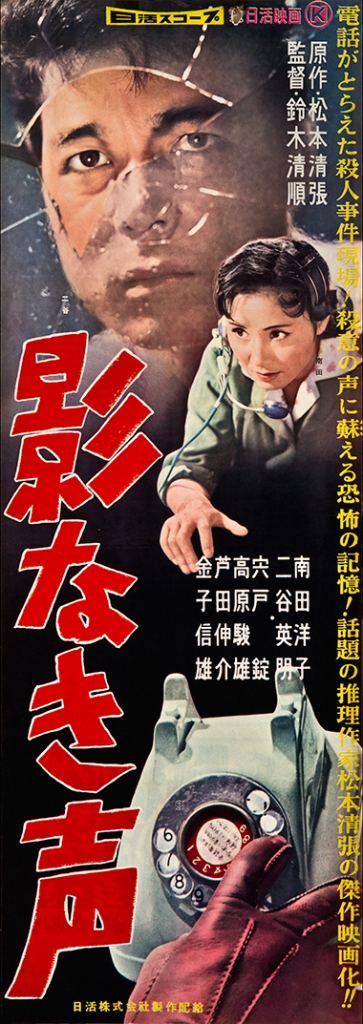
Earlier on the site, I reviewed three films from Nikkatsu’s golden years in the ‘50s and ‘60s. Presented in Arrow Films’ Nikkatsu Diamond Guys Collection vol. 1, I found Voice Without a Shadow to be a decent early taste of Seijun Suzuki, but Red Pier and The Rambling Guitarist were both pretty forgettable, aside from the latter’s unusual Hakodate setting. So when I sat down to watch the films from vol. 2, I wondered whether it was worth digging into each film with a meaty review. I could just binge all three, I figured, and recreate the feeling of watching what I expected to be pretty ephemeral, throwaway pieces of entertainment in the 1960s.
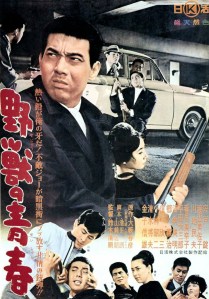
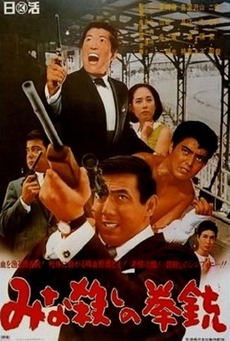
The irony is that vol. 2’s films are much more entertaining and stand out from a crowded field of mid-’60s yakuza films by being much more comedic in tone. It actually feels unusual that rote action films like Youth of the Beast or Massacre Gun get their own standalone release, but Arrow has chosen to practically hide away these gems on the second volume of it’s Diamond Guys series. Perhaps it’s that the directors or the films themselves lack name recognition (Buichi Saito is perhaps best known for his work on Lone Wolf and Cub, while Ko Nakahira’s 1956 film Crazed Fruit is critically acclaimed but he’s otherwise unknown in the West, and Noguchi is billed as a ‘new discovery’).
Nevertheless, I’m going to treat these films more as a ‘collection’ than I normally would. Below are the reviews I wrote up while working through the disc, first posted over on my Letterboxd feed. Here’s hoping that Arrow digs deeper into Nikkatsu’s expansive back catalogue and releases another volume of Diamond Guys in the future.
 Overlooked at the time,
 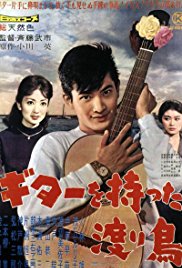 It feels like Arrow must have made a deal with whatever is currently left of the venerable Nikkatsu studio for access to a huge swath of their back catalogue in the last couple of years, because they’ve steadily released volumes in collections like Nikkatsu Diamond Guys and Seijun Suzuki: The Early Years. Not every one of these forgotten films can be a classic, but it’s often fascinating just getting a taste of what Japanese cinema was like in the ‘50s or ‘60s. Sadly, the third film in the first volume of Nikkatsu Diamond Guys,
 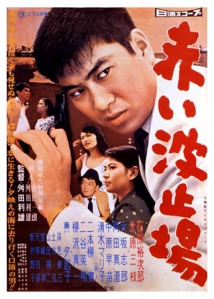 It stars Yujiro Ishihara as “Lefty” Jiro, a ‘50s gangster laying low in Kobe after killing a civilian over a drug smuggling racket. When he falls for the victim’s sister and starts to let slip his involvement, his low-key criminal underworld starts to come unravelled.
 alternately translated as
 Like a few of the other Japanese gangster movies I’ve reviewed here on Kino 893, it’s a title that
  That means the quality and availability of Japanese films with English language subtitles (ignoring for a moment the often very fine work of fansubbers) is not necessarily representative of the quality or breadth of Japanese cinema in general. This is even more true when looking back at older films; while a contemporary film might at least get a limited release in the West, older films by lesser known directors or even by well-respected auteurs can be difficult to find. Even
  2
2 in the 1950s with some of Akira Kurosawa’s best known work. Then I jumped ahead to the ‘60s and ‘70s for some cult classics. Now with Sion Sono’s
  Kino 893