
Continuing a dive into Meiko Kaji’s past performances I decided to check out Delinquent Girl Boss (1970), the first movie in the Stray Cat Rock series. Initially inten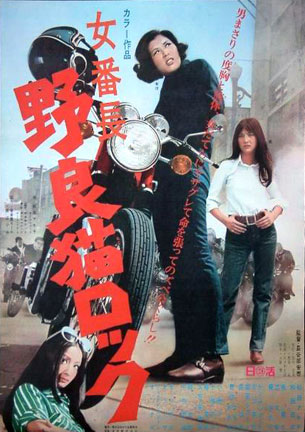 ded as a star vehicle for the popular singer Akiko Wada, from the second film onwards it would be Kaji who scored top billing, and Wada soon disappeared from the cast. Going into the film, I expected it to be a case of Meiko Kaji outshining the intended star – after all, by this point I had already been impressed with her performance in Lady Snowblood and was starting to see why she’s held in such high regard by genre movie fans. I figured that maybe Wada wasn’t able to carry the movie the way Nikkatsu wanted, but I couldn’t have been more wrong.
Continue reading “Review: Stray Cat Rock: Delinquent Girl Boss (1970)”
 previous instalments, Nikkatsu put out no less than six Outlaw movies starring
  an aggressively strange yakuza movie with a touch of the supernatural. It’s so strange the Arrow Video release calls it ‘delerious’ multiple times on the cover, and for once, that doesn’t feel unfair – from the bold use of colour to the costuming to the off-kilter horror elements, the film is a phantasmagoric treat.
 wildly into other areas. That said, I do think there are other, relevant things that could be discussed: American
  horizons on Japanese cinema, one of the main reasons I want to watch films from the ’50s, ’60s, and ’70s is their outsized influence on later filmmakers. Quentin Tarantino is outspoken on the influence Japanese cinema has had on his pictures, with
 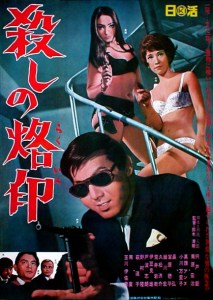 Specifically, it was an anecdote about his film Branded to Kill (1967): a film so far removed from his orders to create a B-movie about a hitman, to fill out the back half of a double bill, that he was promptly fired by the studio. The movie is now regarded as an avant-garde masterpiece, and I knew that I had to see it.
 series. After all, I was treating them as B-movies between the films of Akira Kurosawa: not just one of Japan’s most acclaimed directors but one of the most acclaimed directors of all time. Funny story: the first Outlaw film was directed by Toshio Masuda who, along with Kinji Fukasaku and Richard Fleischer, directed Tora! Tora! Tora! Masuda and Fukasaku were brought in to direct the Japanese side of the production after Kurosawa dropped out. While Keiichi Ozawa directed most of the other instalments, for Heartless, Mio Ezaki took the reigns.
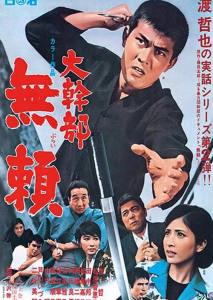 a series of amazing revelations. First, that really is the title (at least the one Arrow Video decided to go with). Second, it came out in April 1968, just a few months after the first movie. Third, no less than five movies in this series came out in 1968 – it’s almost a shame the sixth skids into 1969, but that’s a movie for another day. Fourth, these movies are almost impossible to research: there aren’t even Wikipedia art
 Kino 893