I am, as an old friend is often wont to point out, a massive weeaboo (I prefer ‘Japanophile’, though that makes it sound like I should b e arrested for it). It’s probably no surprise then that I’m a fan of Japanese cinema: if nothing else, even if the movie is bad, it’s a window into a culture I’m interested in and a location I miss living in. The weird part is that until fairly recently I hadn’t seen many Japanese films I could say were good without having to qualify it. When I was younger, Japanese movie imports seemed to entirely consist of Ring-style horror and Takashi Miike’s trashier films.
When I was studying in Japan I even picked a class on Japanese film, but the teacher literally slept through it – I mean head on desk, slept through it – and the entire semester consisted of two projects: shooting an amateur movie and doing a short presentation on an actual Japanese film. Neither of which the teacher had any input in or critique of, so everyone ended up covering rubbish. Of course, I knew there were important films out there; I knew that I was supposed to like Kurosawa, and that before making Battle Royale (which I loved as a teenager) Kinji Fukasaku made well-regarded gangster movies. I just didn’t know which movies I was supposed to watch, or how to get hold of them.
Fast forward a few years (or ten years. I feel old) and I’ve finally seen The Yakuza Papers / Battles Without Honour and Humanity, which sit atop my heap of favourite Japanese movies. Now I’m getting around to watching older stuff, starting with the box of Kurosawa Blu-rays that’ve been sitting on my shelf for two years.
Seven Samurai (1954) is tied with the oldest movie I’ve actually sat down to watch of my own volition (the original Godzilla, naturally). It’s black and white, and three and a half hours long, which seems insane; it even has a twenty minute intermission built into the running time. Putting aside the Peter Jackson-like length I wasn’t sure I was going to like it. Other than Clerks I don’t have much time for B&W pictures and unless I’m playing Shogun: Total War I’m surprisingly uninterested in jidaigeki – give me post-war crime and politics, not samurai.

Continue reading “Review: Seven Samurai (1954)” →
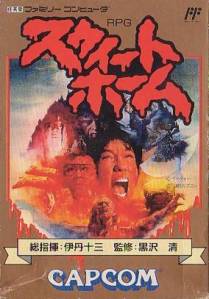 the NES, Nintendo’s first console) also titled Sweet Home based on the film. That game essentially kicks off the “survival horror” genre, with developer Capcom going on to create the far more famous Resident Evil / Biohazard series; the first Resident Evil, set in a dilapidated mansion, takes a lot of inspiration from Sweet Home.
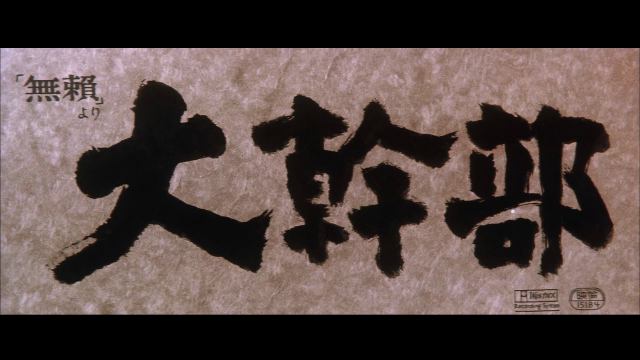
 series. After all, I was treating them as B-movies between the films of Akira Kurosawa: not just one of Japan’s most acclaimed directors but one of the most acclaimed directors of all time. Funny story: the first Outlaw film was directed by Toshio Masuda who, along with Kinji Fukasaku and Richard Fleischer, directed Tora! Tora! Tora! Masuda and Fukasaku were brought in to direct the Japanese side of the production after Kurosawa dropped out. While Keiichi Ozawa directed most of the other instalments, for Heartless, Mio Ezaki took the reigns.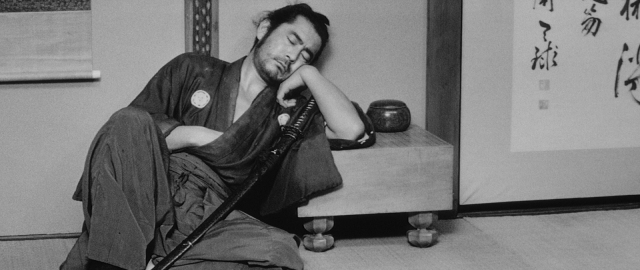
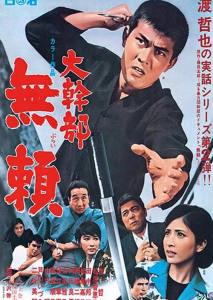 a series of amazing revelations. First, that really is the title (at least the one Arrow Video decided to go with). Second, it came out in April 1968, just a few months after the first movie. Third, no less than five movies in this series came out in 1968 – it’s almost a shame the sixth skids into 1969, but that’s a movie for another day. Fourth, these movies are almost impossible to research: there aren’t even Wikipedia art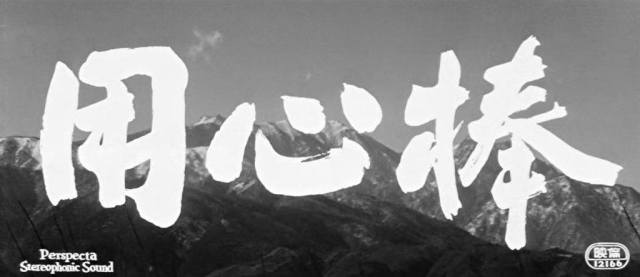


 Kino 893