I was drawn to Hiroshi Inagaki’s Samurai trilogy, starting with Musashi Miyamoto (1954),  for the simple fact that it’s shot in colour. Kurosawa’s masterful Seven Samurai came out in the same year but is, of course, in black and white – it wasn’t until 1970 that he would begin shooting in colour with the commercially disastrous Dodes’ka-den. Surprisingly, the first Japanese colour film only came out in 1951, with the first Japanese colour film to be released in the West, Gate of Hell, not made until 1953. I’m fascinated by that early use of colour. Carmen Comes Home used Fujicolor, but Gate of Hell and Musashi Miyamoto were made with Eastmancolor, a US technique. It’s extraordinary seeing the way colour changes the way the films are shot, and so much of what makes Musashi Miyamoto worth watching is the vivid colourscape – lush green scenery, vibrant clothes, colourful blossoms.
Continue reading “Review: Samurai I: Musashi Miyamoto (1954)”
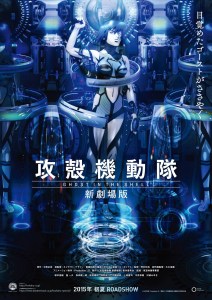 (after the original films and the
 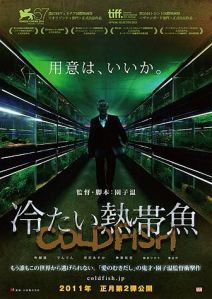 in the 1950s with some of Akira Kurosawa’s best known work. Then I jumped ahead to the ‘60s and ‘70s for some cult classics. Now with Sion Sono’s
  how I’m going to find something meaningful to comment on in a review that I haven’t already said about one of the previous films. Then
 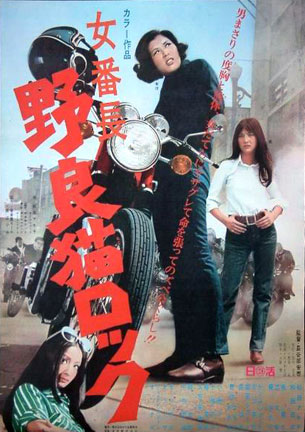 ded as a star vehicle for the popular singer Akiko Wada, from the second film onwards it would be Kaji who scored top billing, and Wada soon disappeared from the cast. Going into the film, I expected it to be a case of Meiko Kaji outshining the intended star – after all, by this point I had already been impressed with her performance in
 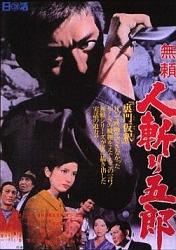 previous instalments, Nikkatsu put out no less than six Outlaw movies starring
 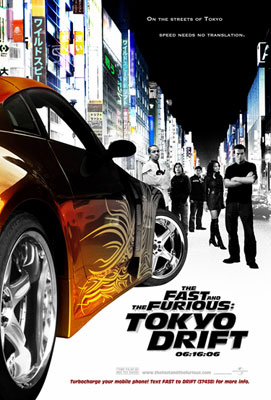 instalment in the now massive, globe-trotting franchise, back in the mid-2000s the future of the series seemed in jeopardy: Vin Diesel had left after one film, Paul Walker after the second. Tokyo Drift was essentially a Hail Mary soft reboot with an all-new cast that transplanted the action to Tokyo, and swapped street races for suitably Japan-inspired drifting.
 an aggressively strange yakuza movie with a touch of the supernatural. It’s so strange the Arrow Video release calls it ‘delerious’ multiple times on the cover, and for once, that doesn’t feel unfair – from the bold use of colour to the costuming to the off-kilter horror elements, the film is a phantasmagoric treat.
 Kino 893