
It’s safe to say I’ve been somewhat disappointed with New Battles Without Honour and 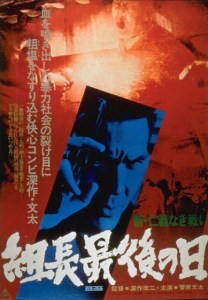 Humanity, the studio-mandated follow-up series to Kinji Fukasaku’s spectacular Battles Without Honour and Humanity. In the first New Battles film, Fukasaku more or less remade his earlier work, but without some of the depth or care. The Boss’s Head turned the series into an anthology of disconnected stories, and while that was an improvement, it still couldn’t hold a candle to Fukasaku’s stronger films. For the first time, then, New Battles Without Honour and Humanity: Last Days of the Boss (1976) feels like Fukasaku and his team brought something genuinely new to the table and turned out a compelling – if flawed – yakuza flick.
Continue reading “Review: New Battles Without Honour and Humanity: Last Days of the Boss (1976)”
 rarely dabbled in reviewing films that I
  cinema I watch. Sometimes I like to highlight other films when they have some crossover with Japan, Japanese culture, or Japanese actors and directors. The South Korean WW2 drama The Battleship Island (2017), from director Ryoo Seung-wan, is just such a film. Set in 1945 on the
  watch. I think it happened when I started massively ramping up the number of films I watch in general. While I might sink tens of hours into a game and would want that time to be well spent, a film is usually over in a couple of hours, and if I didn’t like it, I’d probably be watching another film later that week – perhaps even later that day. And as I’ve written before, even if I walk away from a film disappointed, there’s probably still
 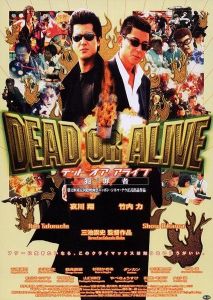 ‘70s, as well as ‘contemporary’ films from the early 2000s onwards, but with a few exceptions I haven’t seen many films from the 1980s or 1990s. I’ve been meaning to rectify that, in part by digging into the filmographies of Juzo Itami and Takashi Miike. Miike began directing in the early ‘90s and has been incredibly prolific, typically directing multiple films per year for most of his career and only recently starting to dial it back – while still directing at least a couple of films a year.
  Kino 893