I first saw Ghost in the Shell (1995) in the late ‘90s, on a probably-rented VHS, with the American dub (which, to my recollection, actually held up as 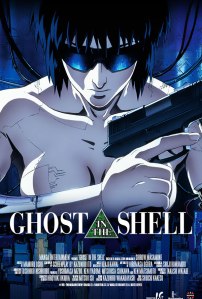 one of the better dubs I’ve heard, though I haven’t tested that in years). Since then I’ve revisited it several times, with the original Japanese audio, both before and after I learned to speak the language. I recently had the opportunity to see it in a cinema for the first time, which presents a perfect moment to discuss the film here.
Month: Jan 2017
Review: Lady Snowblood (1973)
I’ve said it repeatedly already, but it’s still relevant: beyond just wanting to widen my  horizons on Japanese cinema, one of the main reasons I want to watch films from the ’50s, ’60s, and ’70s is their outsized influence on later filmmakers. Quentin Tarantino is outspoken on the influence Japanese cinema has had on his pictures, with Kill Bill in particular owing much to Lady Snowblood (1973).
Review: Branded to Kill (1967)
It didn’t take much research into Japanese film before Seijun Suzuki’s name came up. 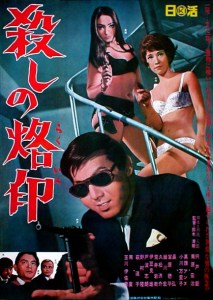 Specifically, it was an anecdote about his film Branded to Kill (1967): a film so far removed from his orders to create a B-movie about a hitman, to fill out the back half of a double bill, that he was promptly fired by the studio. The movie is now regarded as an avant-garde masterpiece, and I knew that I had to see it.
All Caught Up
With Outlaw: Heartless written up for the site, I’m now caught up on reviews for the films I’ve watched so far in 2017. I’ll be adding new articles as I watch new films, aiming to add at least one or two more every month – maybe more. You can jump over to the archive where I have links to all the reviews currently available, as well as those movies I have ready to go but haven’t reviewed yet. If you think there’s something I should definitely cover here then leave a comment or get hold of me on Twitter.
Sweet Home (1989) (A Kino 893 x TGLG Review)
Months before I started this film blog, I recorded a podcast on Sweet Home (1989). It’s a relatively obscure Japanese horror movie from director Kiyoshi Kurosawa with one particular claim to fame: there’s a Famicom game (that’s the Japanese version of 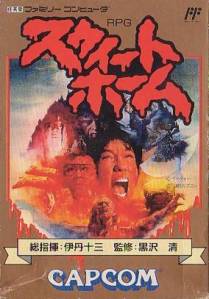 the NES, Nintendo’s first console) also titled Sweet Home based on the film. That game essentially kicks off the “survival horror” genre, with developer Capcom going on to create the far more famous Resident Evil / Biohazard series; the first Resident Evil, set in a dilapidated mansion, takes a lot of inspiration from Sweet Home.
Continue reading “Sweet Home (1989) (A Kino 893 x TGLG Review)”
Review: Outlaw: Heartless (1968)
Sitting down to watch Outlaw: Heartless (1968), I wondered if I was being too harsh on the  series. After all, I was treating them as B-movies between the films of Akira Kurosawa: not just one of Japan’s most acclaimed directors but one of the most acclaimed directors of all time. Funny story: the first Outlaw film was directed by Toshio Masuda who, along with Kinji Fukasaku and Richard Fleischer, directed Tora! Tora! Tora! Masuda and Fukasaku were brought in to direct the Japanese side of the production after Kurosawa dropped out. While Keiichi Ozawa directed most of the other instalments, for Heartless, Mio Ezaki took the reigns.
A Fresh Start
I kicked off 2017 with a string of vintage Japanese movies I’d never seen before. Kurosawa’s Seven Samurai and Throne of Blood, the Speed-like The Bullet Train, and a scattering of late ’60s B-movies. I started putting my thoughts on them together on my Facebook page at first, but after a while, people kept suggesting I start a blog instead (for the record, I’m pretty sure they just wanted me to stop clogging up their feeds with black-and-white stills from ’50s movies).
This isn’t intended to be a set of professional reviews. They’re my subjective opinions while working my way through seventy-odd years of Japanese cinema, but I hope to throw in some of the interesting facts I’m picking up along the way, and flesh out the reviews as I go on.
If there’s a particular movie you think I should see, leave a comment or get in touch through Twitter.
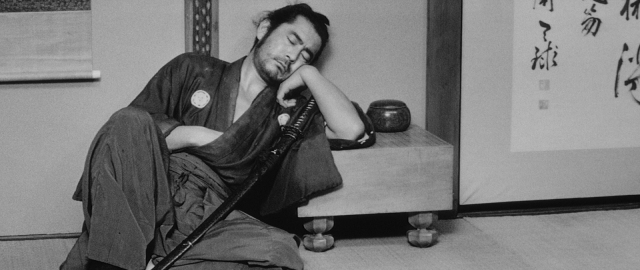
Review: Sanjuro (1962)
To the best of my knowledge, Kurosawa only made two sequels in his career. The first was a sequel to his debut movie Sanshiro Sugata. The second was Sanjuro (1962), a follow-up to Yojimbo. It wasn’t originally meant to be that way – Sanjuro was intended to be a straight adaptation of an existing novel, but the success of Yojimbo led to it being reworked, with lead character Sanjuro returning. It’s not unlike the many Die Hard sequels, each an existing treatment, reimagined with John McClane as the lead character (ironically, all except for the dismal Die Hard 5, the only movie actually written and intended to be a Die Hard movie from the beginning).
Review: Outlaw: Gangster VIP 2 (1968)
After watching Outlaw: Gangster VIP 2 (1968), I had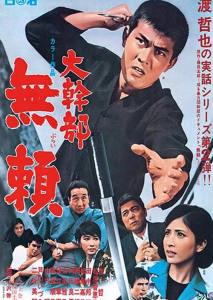 a series of amazing revelations. First, that really is the title (at least the one Arrow Video decided to go with). Second, it came out in April 1968, just a few months after the first movie. Third, no less than five movies in this series came out in 1968 – it’s almost a shame the sixth skids into 1969, but that’s a movie for another day. Fourth, these movies are almost impossible to research: there aren’t even Wikipedia articles, in English or Japanese.
Review: Yojimbo (1961)
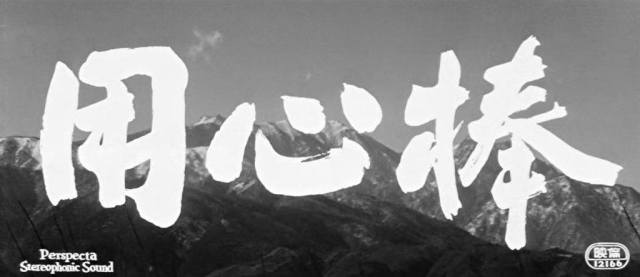
It’s back to Kurosawa for Yojimbo (1961). I was a little apprehensive after The Hidden Fortress, but any worries were misplaced: this is a samurai gangster action comedy masterpiece.
 Kino 893