
It is not my intention, still early in the run of this blog on Japanese cinema, to branch too  wildly into other areas. That said, I do think there are other, relevant things that could be discussed: American re-edits or remakes of Japanese productions, books on the subject, and videogames that draw from the history of film. There’s one series that’s particularly dear to me: SEGA’s Yakuza (龍が如く/ Ryū ga Gotoku). First launching in Japan in 2005 and 2006 in the West, the series transplants recognisable yakuza movie tropes onto a long-running videogame franchise. It’s easy to see the influence Japanese cinema of the ‘60s and ‘70s has had on it, from casting Tetsuya Watari (star of the Outlaw VIP series) as the protagonist’s yakuza mentor Shintaro Kazama, to the dramatic, freeze-frame splash screens that list the various characters’ names, ranks, and affiliations – a stylish technique ripped straight from Kinji Fukasaku’s Battles Without Honor and Humanity.
2017 has seen the belated, but extremely welcome, Western release of Yakuza Zero (originally launching in Japan in March 2015). Set in 1988 at the height of the Japanese Bubble Economy, the game is both a prequel to the series and the first non-spin off released on the PlayStation 4, making it an excellent jumping on point for newcomers.
 satisfying take on the
 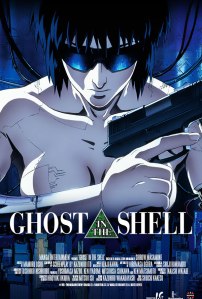 one of the better dubs I’ve heard, though I haven’t tested that in years). Since then I’ve revisited it several times, with the original Japanese audio, both before and after I learned to speak the language.
  horizons on Japanese cinema, one of the main reasons I want to watch films from the ’50s, ’60s, and ’70s is their outsized influence on later filmmakers. Quentin Tarantino is outspoken on the influence Japanese cinema has had on his pictures, with
 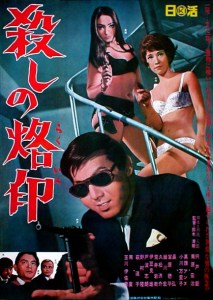 Specifically, it was an anecdote about his film Branded to Kill (1967): a film so far removed from his orders to create a B-movie about a hitman, to fill out the back half of a double bill, that he was promptly fired by the studio. The movie is now regarded as an avant-garde masterpiece, and I knew that I had to see it.
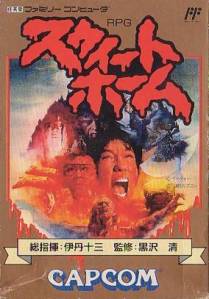 the NES, Nintendo’s first console) also titled Sweet Home based on the film. That game essentially kicks off the “survival horror” genre, with developer Capcom going on to create the far more famous Resident Evil / Biohazard series; the first Resident Evil, set in a dilapidated mansion, takes a lot of inspiration from Sweet Home.
 series. After all, I was treating them as B-movies between the films of Akira Kurosawa: not just one of Japan’s most acclaimed directors but one of the most acclaimed directors of all time. Funny story: the first Outlaw film was directed by Toshio Masuda who, along with Kinji Fukasaku and Richard Fleischer, directed Tora! Tora! Tora! Masuda and Fukasaku were brought in to direct the Japanese side of the production after Kurosawa dropped out. While Keiichi Ozawa directed most of the other instalments, for Heartless, Mio Ezaki took the reigns.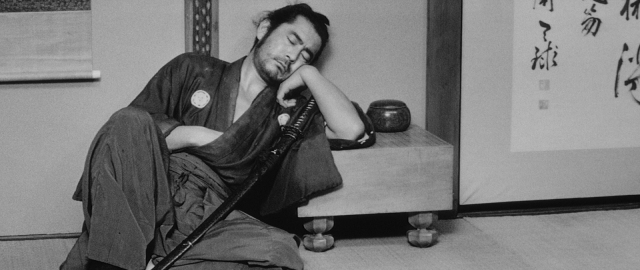
 Kino 893